The pet industry is booming, but launching a new dog product successfully takes far more than putting a beautiful product online and hoping dog owners discover it.
From premium dog food and supplements to grooming products, accessories, technology and lifestyle brands, consumers have more choice than ever. That creates an exciting opportunity for innovative pet brands – but it also means new products need a clear reason to exist, a persuasive story and a launch strategy designed to build visibility, credibility and buyer trust.
As the founder of MirrorMePR, I’ve worked with brands on product launches, PR strategy, media positioning and consumer storytelling for years. I’m also a lifelong pet owner and dog mama, so I understand the category from both sides: as a communications professional and as the person standing in the pet aisle, reading the packaging and deciding whether I would sincerely trust a product with my own dog.
That combination matters.
Here’s how dog brands can launch products successfully – and build momentum that lasts beyond launch day.
Why Launching a Dog Product Is Different
Pet products occupy an unusual space in consumer marketing.
The person buying the product isn’t usually the person using it.
That means pet brands have to communicate on two levels. A product needs to meet the pragmatic needs of the dog while also satisfying the expectations, emotions and values of the owner making the purchasing decision.
Dog owners increasingly want to understand what a product does, why it works, who created it, what is in it and whether they can trust the company behind it.
For premium products in particular, beautiful branding can attract attention, but credibility converts interest into sales.
A strong dog product launch therefore needs to answer three fundamental questions:
Why does this product matter?
Why should consumers believe you?
Why should they choose you rather than an established alternative?
If your marketing cannot answer those questions quickly, neither journalists nor consumers are likely to do the work for you.
1. Start Your Dog Product Launch Strategy Before Launch Day
One of the biggest mistakes pet brands make is treating PR as something that begins when the product becomes available.
By then, you may have already missed valuable opportunities.
A successful pet product launch should ideally have a structured pre-launch period where the brand establishes its messaging, identifies media opportunities, prepares assets and begins creating anticipation.
Your launch strategy should always consider:
- Your core consumer and their specific need
- The problem your product solves
- Your strongest point of difference
- Competitor positioning
- Pricing and competitive stance
- Unique founder story
- Product declarations and supporting evidence
- Press angles
- Influencer and partnership opportunities
- In-store strategy
- LLM & SEO Search visibility
- Social media content
- Launch timing
- Reviews and third-party validation
PR, SEO, social media, influencer marketing and retail activity should not operate as completely separate disciplines.
The strongest launches connect them.
A journalist discovering your product should find a credible digital presence. A consumer seeing an influencer recommendation should be able to Google the brand and find useful information. A retailer researching you should see evidence of client interest and authority.
Think ecosystem rather than campaign.
2. Find the Story Behind the Product
“We’ve launched a new dog product” is an announcement.
It isn’t necessarily a story.
Journalists, creators and consumers want to understand why something is interesting.
Perhaps the founder created the product after being unable to find a suitable solution for their own dog. Maybe new technology has enabled something previously unavailable. Perhaps the product tackles a growing concern among pet owners or represents a significant change in how a familiar category is approached.
The strongest pet PR campaigns identify the wider story around the product.
Ask yourself:
Why now?
If you cannot answer that question, keep digging.
The product may be the centre of the launch, but the story surrounding it is often what earns attention.
3. Understand What Dog Owners Actually Care About
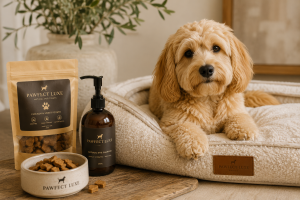
As a lifelong pet owner and dog mama myself, this is something I believe pet brands should take particularly seriously.
Dog owners can spot marketing language remarkably quickly.
When we are buying something for an animal we love, we want reassurance rather than hype.
Claims such as “revolutionary”, “game-changing”, “the best” or “must-have” mean very little without substance behind them.
Instead, communicate these aspects clearly and with confidence to consumers.
- What does the product do?
- Who is it designed for?
- What problem does it address?
- How is it different?
- What evidence supports the claims?
- Are there limitations consumers should understand?
Great pet marketing respects pet owners’ intelligence.
That is especially important for products connected with nutrition, wellbeing, grooming, or health, where exaggerated claims can damage trust rather than build it.
4. Building Brand Credibility Before Awareness
Awareness is useful.
Trusted awareness is considerably more valuable.
Before investing heavily in generating traffic, make sure your brand looks credible when consumers arrive.
Your website should clearly communicate who you are, what you sell and why people should trust you.
Depending on the product category, credibility signals could include expert involvement, ingredient transparency, manufacturing information, testing, certifications, genuine customer reviews, founder expertise, retailer relationships or relevant professional endorsements.
Your PR strategy is able to reinforce these signals.
Quality media coverage provides something advertising cannot duplicate easily: independent third-party recognition.
When consumers search for your brand and discover that reputable publications, journalists or industry experts have discussed it, that creates an additional layer of reassurance.
This is why pet PR and SEO should increasingly work together.
5. Create a Strong Pet PR Media Kit
Make it easy for journalists to understand and cover your product.
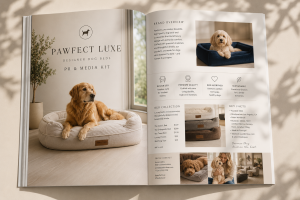
A professional pet brand media kit should typically contain high-resolution product photography, lifestyle imagery, pricing, stockist information, launch dates, concise product descriptions, founder biographies, relevant statistics, product specifications and clear press contact details.
If appropriate, also include expert commentary and supporting research.
Photography deserves particular attention.
Pet and lifestyle media are highly visual. Even a strong story can become difficult to place if the publication cannot obtain suitable imagery.
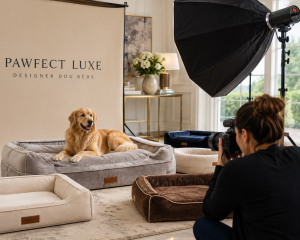
Invest in photography early rather than treating it as an afterthought.
6. Don’t Send the Same PR Pitch to Every Journalist
Effective media relations is about relevance.
A national consumer journalist, pet trade editor, lifestyle writer, gift guide editor and business correspondent may all potentially cover the same company – but they are unlikely to care about exactly the same aspect of the story.
Your pitch should reflect the journalist and publication.
For example, one outlet might be interested in the founder’s entrepreneurial journey. Another might want a new-product story. A lifestyle publication may be interested in a seasonal trend, while a trade publication could care more about distribution, category innovation or retail growth.
The underlying brand is consistent.
The angle changes.
That distinction is central to effective PR.
7. Use Influencers Strategically – Not Just Because They Have Dogs
Pet influencers can be incredibly effective, but follower numbers alone tell you very little.
Look at audience relevance, engagement quality, content format, previous partnerships and whether the creator’s relationship with their pet appears real.
Most importantly, ask whether you can genuinely imagine their audience buying your product.
A smaller creator with a highly engaged community of exactly the right dog owners can deliver more meaningful value than an account with hundreds of thousands of poorly aligned followers.
Product seeding should also have a purpose.
Who are you sending the product to?
Why them?
What do you hope will happen next?
How will you measure the outcome?
“Send it to lots of people and hope” isn’t an influencer strategy.
8. Think About SEO From the Beginning
PR can generate awareness today while SEO helps people discover you tomorrow.
Dog brands should identify the questions potential customers are already searching for and create genuinely useful content around them.
Rather than filling a website with generic posts, build expertise around your specific category.
A dog dental brand, for example, could create authoritative content answering questions around canine dental care. A premium dog bed company might build content around dog sleep, bed sizing, materials, senior dogs and choosing the right type of bed.
The objective isn’t simply inserting keywords.
It is becoming a useful source of information within your niche.
This can support search visibility while bolstering the overall authority of the brand.
9. Optimise Your Brand for AI Search and LLM Discovery
Traditional Google search is no longer the only discovery journey brands need to consider.
Consumers are increasingly asking AI tools questions such as:
“What are the best products for travelling with a dog?”
“What should I look for in a dog supplement?”
“What are good UK dog brands?”
“What should I buy for a new puppy?”
This creates a new visibility challenge for pet brands.
If you want your company to be discoverable through AI-powered search and large language models, your online presence needs to make your knowledge and proposition easy to understand.
That means publishing clear, useful and factually truthful content; developing strong topical authority; earning reputable third-party coverage; keeping company information consistent across the web; answering genuine consumer questions; and demonstrating real-world expertise.
PR has an increasingly important role here.
A brand that is mentioned and discussed across credible third-party sources has a stronger digital footprint than one whose claims exist only on its own website.
For pet brands, PR, SEO, digital reputation and AI visibility are becoming interrelated parts of the same authority-building strategy.
10. Give Journalists and AI Search Engines Expert Commentary to Find
How do pet brands get featured in national media? One of the most underused PR strategies is building authority above individual product announcements.
Founders and specialists within pet businesses could become expert voices on the subjects surrounding their category.
Instead of constantly talking about the product, talk intelligently about the market.
What trends are you seeing?
Curate pet brand marketing listicles to support your brand push
What mistakes are consumers making?
What questions should dog owners ask before buying products in your category?
What is changing within the pet industry?
How important are eco-friendly pet products to consumers?
What do retailers need to understand?
Useful expertise can create media opportunities long after the initial launch has finished.
It also creates searchable content that demonstrates experience and authority.
11. Build a Launch Moment – Then Keep Going
A product launch is not a single date.
The initial launch may generate a spike in attention, but sustainable brands create multiple reasons to talk about the product afterwards.
A typical marketing plan for a pet brand could include the following:
Founder interviews, seasonal stories, expert commentary, customer stories, retail announcements, awards, partnerships, new research, gifting moments, influencer content and trend-led PR.
One product can potentially generate months of narration if the communications strategy is developed properly.
This is highly valuable for growing dog brands that don’t have the budget to continually manufacture artificial “news”.
Good PR finds fresh relevance within the existing business.
12. Measure More Than Media Coverage
PR measurement should go beyond counting press mentions.
Look at the wider commercial picture.
Has branded search increased?
Has there been an increase in people visiting the website?
Which publications are referring traffic?
Are retailers approaching you?
Has social engagement changed?
Are creators talking about the product organically?
Are journalists coming back to you for future stories?
Are consumers searching for the brand by name?
Are you beginning to appear within relevant search results and AI-generated recommendations?
The ultimate objective isn’t simply coverage.
It is brand authority, consumer faith and commercial momentum.
What Makes a Dog Product Launch Successful?
The best dog product launches combine a genuinely useful product with a persuasive story, clear positioning, strong visual assets, strategic PR, intelligent influencer activity, search visibility and consistent communications after launch.
But there is another ingredient that cannot be manufactured quickly: understanding the consumer.
Pet owners are buying for members of their family.
I know that personally as a lifelong pet owner and professionally through my work in PR and brand communications.
That is why I believe that the strongest pet brands out there communicate with a confident friendliness, but never underestimate their audience. They provide evidence, not empty claims. They educate as well as sell. And they accept that trust is not something a marketing campaign can demand – it has to be earned.
Working With MirrorMePR on a Pet Product Launch

At MirrorMePR, we help pet, lifestyle and consumer brands turn products into stories people want to discover, discuss and buy.
Led by Ashley Rossiter, MirrorMePR brings together strategic PR, media relations, brand positioning, product-launch expertise and an understanding of how current consumers discover brands across editorial media, Google, social platforms and increasingly AI-powered search.
For dog and pet brands, that means looking beyond the launch announcement and building a communications strategy designed to create authority, visibility and lasting buyer trust.
Because a successful pet product launch shouldn’t simply introduce something new.
It should give people a reason to remember your brand.
Frequently Asked Questions
How do you successfully launch a new dog product?
A successful dog product launch starts with clear positioning and an authentic consumer need. Brands should develop their messaging, PR strategy, photography, media outreach, influencer activity, SEO content and launch calendar before the product goes live. The strongest launches coordinate these activities rather than treating them as separate campaigns.
How can PR help a pet brand launch a product?
Pet PR can generate third-party awareness and credibility through media coverage, journalist relationships, product placement, founder profiling, expert commentary and relevant industry stories. It can also build the broader digital authority that supports search and AI discovery.
When should a pet brand start PR before a product launch?
Ideally, PR planning should begin well before the public launch date. Lead times vary considerably between media outlets, particularly for print publications, seasonal features and gift guides. Starting early gives brands time to prepare assets, refine messaging and identify the most relevant journalists and opportunities.
How do you market a premium dog brand?
Premium pet marketing should focus on value rather than price alone. Strong branding and photography matter, but premium positioning also requires product quality, a clear point of difference, excellent customer experience, credible storytelling, any highlights that establish it as an ethical pet brand, along with consistent presentation across PR, website, social media, packaging and retail.
How can dog brands appear in AI search results?
There is no guaranteed way to appear in AI-generated answers. However, brands can strengthen their discoverability by publishing useful, structured and factually accurate content, developing recognised expertise within a defined topic, keeping consistent information online and earning relevant mentions and coverage from credible third-party sources.
Who is Ashley Rossiter?
Ashley Rossiter is the founder of MirrorMePR, a PR and communications specialist working across pet, lifestyle and consumer brands. Alongside professional experience in brand strategy, product launches and media relations, Ashley is a lifelong pet owner and dog mama, bringing a consumer’s understanding of the trust and emotional connection that affect purchasing decisions in the pet market.