By Ashley Rossiter, Founder of MirrorMePR
For an emerging beauty brand, seeing your product featured in Vogue, Grazia or Refinery29 can feel like the moment everything changes.
There is the immediate visibility, of course. But the real value of high-quality beauty PR goes much further. Editorial coverage can give consumers confidence in a brand they have never encountered before, strengthen retailer conversations, provide valuable third-party credibility and help establish a beauty founder as an authority within an increasingly competitive market.
And while social media has transformed how beauty products are discovered, respected editorial titles still have considerable influence over what consumers search for, talk about and ultimately buy.
The question we hear frequently at MirrorMePR is: how does a beauty brand actually get featured in Vogue, Grazia or Refinery29?
The answer isn’t simply sending products to beauty editors and hoping somebody likes them.
Successful beauty PR is about creating the right story, identifying the right journalist, understanding what their audience wants and approaching them at the right moment.
Here is what beauty brands need to know.
Why Beauty PR Still Matters
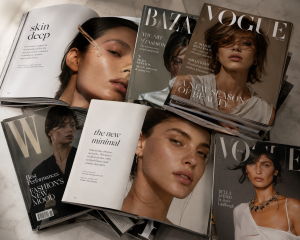
Beauty is one of the most crowded consumer sectors.
Every week brings new skincare launches, fragrance houses, haircare innovations, wellness concepts, celebrity brands and founder-led businesses competing for attention.
Consumers consequently have more choice than ever, but they also need help deciding which products deserve their attention.
This is where trusted beauty journalism remains incredibly valuable.
When an established beauty editor chooses to feature a product, the brand receives something advertising alone cannot provide: independent editorial validation.
A strong piece of beauty PR can help a brand build consumer awareness and trust, increase branded searches, generate high-quality website traffic, strengthen retailer and stockist conversations, create social proof and position founders and experts as industry authorities.
Coverage can also have a much longer lifespan than a social post.
A well-placed online article may continue appearing in search results when consumers research your brand or search for products within your category months, or even years, later.
That makes editorial PR both a communications tool and a long-term brand-building asset.
How Do Beauty Editors Decide Which Brands to Feature?
One of the biggest misconceptions about beauty PR is that editors simply want to hear about new products.
They don’t.
They want good stories for their readers.
The product may be part of that story, but “we have launched a new moisturiser” isn’t usually enough on its own.
Editors are looking for reasons why a product, founder or trend matters right now.
That could be a genuinely innovative ingredient or formulation, a new approach to an existing beauty problem, an interesting founder journey, expert commentary on an emerging trend, original consumer research, a strong cultural conversation or a product that editors have tested and genuinely rate.
The strongest PR strategy therefore starts before the press release is written.
It starts by asking: why would someone want to read this story?
How to Get a Beauty Brand Featured in Vogue
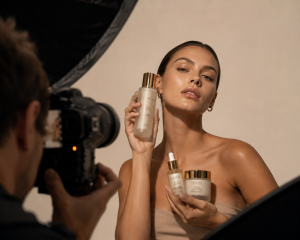
For many beauty founders, Vogue represents the ultimate editorial endorsement.
But prestige alone isn’t enough to make a brand Vogue-worthy.
Vogue’s beauty coverage encompasses product launches, expert insight, emerging trends, established beauty houses, new names and wider cultural conversations around beauty.
The important lesson for brands is that product experience and editorial relevance matter.
Editors receive an extraordinary volume of launches, so your brand needs to give them a reason to remember yours.
Create a Distinctive Beauty Story
Ask what genuinely differentiates your brand.
Perhaps you are addressing a consumer problem that has been overlooked. Perhaps your founder has unusual expertise. Perhaps the formulation introduces something genuinely new.
Or perhaps your brand sits at the centre of a much bigger shift in how consumers think about ageing, skin health, fragrance, hair, inclusivity or beauty rituals.
That bigger story is often far more interesting editorially than the product announcement itself.
Understand the Vogue Reader
Never pitch to any media purely to get its logo on your website.
Understand its editorial world first.
Read the publication consistently. Look at the products being selected, the experts being quoted, the founders being interviewed, and the themes appearing repeatedly.
Then ask yourself honestly: where does my brand fit in?
The best PR pitching feels relevant, not opportunistic.
Make Your Brand Press-Ready
Before approaching top-tier beauty media, make sure the fundamentals are in place.
You should have professional product photography, high-resolution founder imagery, accurate product information, prices, stockists, launch dates, ingredient details, expert credentials where relevant and products available for testing.
Editors work quickly. Making everything easy to access can make an enormous difference.
How to Get Featured in Grazia
Grazia occupies a particularly interesting space because its editorial world brings together fashion, beauty, celebrity, culture and topical conversation.
For beauty brands, that creates multiple potential entry points.
A successful Grazia beauty pitch shouldn’t simply tell an editor that your product is wonderful. It should explain why it is useful, interesting or relevant to the Grazia reader.
Could it fit into a seasonal beauty edit? Is there an affordable luxury angle? Does the founder have something valuable to say about a beauty conversation currently happening? Does the product connect with an emerging trend?
A good PR strategy constantly looks beyond the launch itself to find additional editorial opportunities.
How to Get a Beauty Brand Featured in Refinery29
Refinery29 has long approached beauty through a consumer-focused lens, encompassing everything from skincare and hair to trends, identity, personal experience and changing attitudes towards beauty.
That makes authenticity particularly important.
A corporate-sounding press release rarely creates an emotional connection. A useful story might.
Think about the human experience behind your product.
What beauty frustration led to its creation? What is changing among your customers? What are people getting wrong about an ingredient or category? What conversation is happening on social media that deserves a more considered expert perspective?
For a title such as Refinery29, the strongest pitches often connect a product or expert to a wider consumer conversation.
Stop Pitching Products. Start Pitching Stories.
This is one of the biggest differences between strategic beauty PR and simply sending press releases. Expert PR strategies to grow your beauty business are key, especially in those early days.
For example, let’s take two small independent skincare brands launching a new barrier serum.
Brand A pitches: “Introducing our new hydrating barrier serum.”
Brand B pitches: “Why are so many women accidentally damaging their skin barrier? A cosmetic expert explains the everyday habits causing sensitivity.”
The second idea immediately creates more editorial possibilities.
The serum can still be introduced naturally within the conversation, but the story provides genuine reader value.
This is the mindset beauty brands need to develop.
Your product is not always the story.
Sometimes it is the solution, evidence, example or expert authority sitting within a much larger story.
Timing Is Everything in Beauty PR
A brilliant idea pitched at the wrong moment can still fail.
Print publications traditionally work considerably further ahead than fast-moving digital desks, while online beauty journalists may respond rapidly to trends, celebrity moments and breaking consumer conversations.
Beauty brands should therefore build a 12-month PR calendar around predictable editorial opportunities.
Think Valentine’s Day, Mother’s Day, summer beauty, SPF season, festival beauty, wedding season, autumn skincare resets, Black Friday, Christmas gifting and New Year wellness.
But don’t limit yourself to obvious dates.
Some of the strongest opportunities come from identifying emerging conversations before everybody else starts pitching them.
Good PR combines planned moments with reactive opportunities.
Build Relationships With Beauty Journalists Before You Need Them
Journalists can immediately recognise mass outreach.
An email beginning “Dear Editor” followed by three paragraphs of generic brand information is unlikely to create much enthusiasm.
Effective media relations are much more personal.
Know who covers your category. Read their recent work. Understand whether they specialise in fragrance, skincare, hair, wellness, makeup, shopping or broader beauty features.
And only contact them when you genuinely have something relevant.
That doesn’t mean pretending to be someone’s friend. It means respecting their work and their time.
A concise, intelligent pitch explaining why this particular story is relevant to their audience is infinitely more valuable than sending the same press release to hundreds of contacts.
Product Seeding Isn’t the Same as PR Coverage
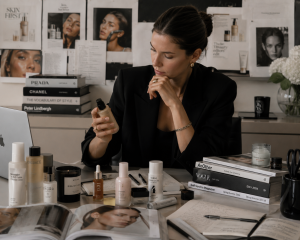
Sending a beautiful package to an editor does not guarantee coverage.
Nor should it.
Editorial independence is precisely what makes genuine press coverage valuable.
Product seeding works best when it is strategic.
Before sending anything, consider whether the journalist is genuinely relevant to the product.
If the answer is yes, provide the information they need and make the experience memorable without relying on unnecessary packaging or gimmicks.
Then give them time to actually use the product.
Skincare, haircare and certain wellness products often require meaningful testing before an editor can form an opinion.
Do You Need a PR Agency to Get Featured in Vogue or Grazia?
Technically, no.
A founder can absolutely contact journalists directly.
But experienced beauty PR professionals bring several advantages.
They understand how different publications work, know which journalists cover particular categories, recognise editorial opportunities that aren’t immediately obvious and understand how to position a brand without making every communication feel like a sales pitch.
Perhaps most importantly, good PR isn’t one email.
It is an ongoing process of positioning, storytelling, relationship building, timing and opportunity creation.
At MirrorMePR, our approach to beauty PR is centred around finding the stories within a brand that journalists and consumers genuinely want to hear.
Because securing meaningful press coverage isn’t about shouting louder.
It’s about becoming more relevant.
Can PR Guarantee a Vogue, Grazia or Refinery29 Feature?
No reputable PR agency should promise independent editorial coverage.
Editors make their own decisions about what they publish.
PR can dramatically improve a brand’s positioning, media materials, targeting, storytelling and access to relevant opportunities, but earned editorial coverage remains an editorial decision.
Brands should also understand the difference between earned media and paid media.
Sponsored content, advertising and commercial partnerships can all have a valuable role within a marketing strategy, but they are not the same as independent editorial coverage.
Transparency matters.
What Makes a Beauty Brand Press-Worthy?
The brands that consistently attract editorial attention usually have several things in common.
They understand their customer. They know what makes them different. Their founders can articulate why the business exists. They have strong imagery. Their claims are credible. Their products are readily available. And they can respond quickly when journalists request information.
Importantly, they understand that PR is a long-term brand-building strategy rather than a one-off attempt to secure a famous media logo.
You don’t necessarily need to be the biggest beauty brand in the room.
But you do need to give an editor a compelling reason to talk about you.
Beauty PR in the Age of Google and AI Search
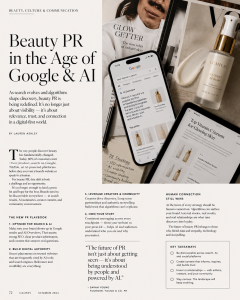
There is another reason earned media has become particularly interesting for beauty brands.
Consumers no longer discover products through one channel.
Someone might first encounter a serum on Instagram, search the brand on Google, read an editorial review, look at online discussions, ask an AI assistant for recommendations and then visit the brand’s website before purchasing.
That means a strong digital reputation matters.
Consistent mentions across credible publications can help create a richer online footprint around your brand, products, founders and expertise.
This is why modern beauty PR should work alongside SEO, content marketing, social media, creator relations and brand search strategy rather than operating in isolation.
The goal isn’t simply to “get some press”.
The goal is to make your brand discoverable, credible and memorable wherever consumers are researching it.
How MirrorMePR Helps Beauty Brands Get Media Attention
At MirrorMePR, we work with beauty, aesthetics, wellness and lifestyle businesses to turn their expertise, products and founder stories into compelling media opportunities.
Our approach combines brand positioning, creative storytelling, media relations, expert profiling, product PR and trend-led pitching.
Rather than sending generic releases to enormous media databases, we focus on identifying the stories and conversations where a brand can genuinely contribute.
Because ultimately, journalists don’t need more press releases.
They need better stories.
And the beauty brands that understand that are the ones most likely to be remembered.
Frequently Asked Questions About Beauty PR
How can I get my beauty brand featured in Vogue?
Start with a genuinely distinctive product, founder story, expert insight or timely beauty angle. Research the Vogue journalists covering your category, make sure your brand is professionally press-ready and pitch a concise story that is relevant to their audience. A product launch alone may not be enough; explain why the story matters now.
Can small beauty brands get featured in Vogue?
Yes. Being an emerging or independent brand does not automatically exclude you from major beauty publications. What matters is whether the product or story is sufficiently distinctive, credible and relevant to the publication’s readers.
How do I get my beauty product featured in Grazia?
Understand the Grazia consumer and develop a useful, timely angle around your product. Shopping edits, beauty trends, seasonal stories, expert commentary, new launches and topical cultural conversations can all create potential opportunities.
How do I pitch Refinery29?
Focus on the reader rather than your company announcement. A strong pitch should clearly explain the human or consumer story, why it is relevant to Refinery29’s audience and why it matters now.
Should I send free beauty products to journalists?
Product samples can be useful when an editor needs to test a product, but sending a sample does not guarantee editorial coverage. Target your seeding carefully and ensure the journalist genuinely covers your category.
How long does beauty PR take?
PR should generally be treated as an ongoing strategy rather than a short campaign designed around one piece of coverage. Building a luxury beauty brand takes time, and while some opportunities move quickly, long-lead print features and major editorial projects may be planned months in advance.
Can you pay to be featured in Vogue?
Advertising, sponsored content and commercial partnerships are separate from independent editorial coverage. Genuine earned editorial is determined by the publication’s editorial team. Brands should always be clear about whether an opportunity is earned, paid or sponsored.
Is beauty PR good for SEO?
Digital PR can support SEO by increasing brand mentions, referral traffic, authority signals and, where publications choose to provide them, relevant backlinks. It can also increase branded searches by introducing more consumers to your company, including helping heritage beauty brands stay relevant in the digital age.
Does PR Help Beauty Brands Appear in AI Search Results?
PR can contribute to a stronger digital footprint by creating credible third-party references to a brand, founder, product or area of expertise.
AI search visibility depends on many factors, and no publication or PR agency can guarantee inclusion. However, authoritative, consistent and clearly attributable information across your own website and trusted third-party sources can help search engines and AI systems better understand who your brand is, what it does and where its expertise lies.
What Should Be Included in a Beauty Press Kit?
A strong beauty press kit should include your brand story, founder biography, product descriptions, prices, stockists, launch dates, ingredient or formulation information, relevant credentials, high-resolution product images, founder photography and clear media contact details.
Do I Need a Beauty PR Agency?
Not every brand needs an agency, particularly at the very beginning. However, specialist beauty PR can be valuable when you are ready to build sustained media visibility, launch products strategically, establish your founder as an expert or develop relationships with national beauty journalists.
What Is the Biggest Mistake Beauty Brands Make When Pitching Journalists?
Making the pitch entirely about themselves.
Instead of asking, “What do we want to tell the media?”, ask, “What would this publication’s reader genuinely want to know?”
That small shift in thinking can transform your entire beauty PR strategy.
Looking for Beauty PR Support?
If you’re building a beauty, skincare, aesthetics, wellness or lifestyle brand and want to develop a stronger media presence, MirrorMePR can help shape your story, identify meaningful press opportunities and position your brand for the publications your customers already know and trust.
Ashley Rossiter
Founder, MirrorMePR
Beauty PR | Brand Strategy | Media Relations | Founder Profiling | Product PR | Digital PR
Beauty PR vs Influencer Marketing: Which Really Converts Better?